
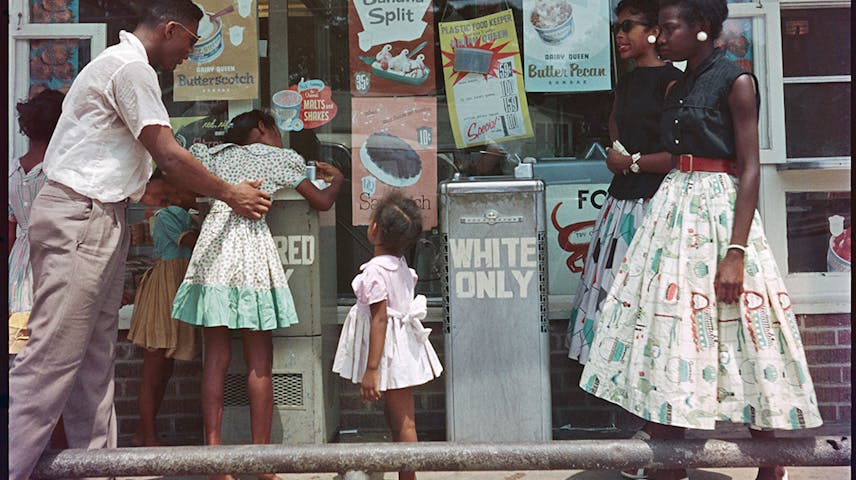
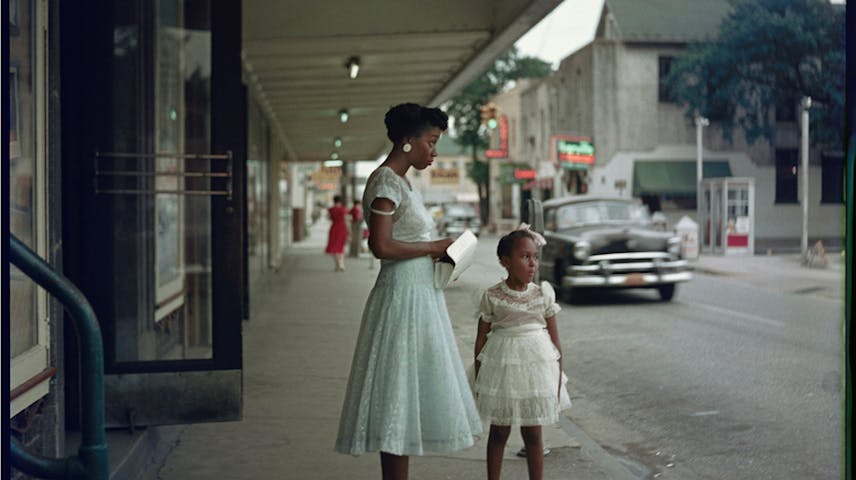
Untitled, Shady Grove, Alabama, photo by Gordon Parks, 1956. Photo by: Courtesy of and copyright The Gordon Parks Foundation
By
Gordon Parks Foundation
Text Type
Photo Gallery
Words
260
Published
1956
Civic change happens when communities work to make laws and society more fair. This often happens when three forces work together:
Systems: The formal structures, such as laws, courts, and government policies.
Collective Action: Groups of people organizing, protesting, and acting together to demand progress.
Personal Testimony: Individuals brave enough to share their lived experiences to ensure history is remembered and passed down.
In this unit, you will investigate how these forces worked together during the Civil Rights Movement. As you observe the image of the 1960 lunch counter sit-in, think about how people might have used collective action to challenge a system of segregation in a public space.
Reflect and Respond
Directions: Take 30–45 seconds to observe silently. As you look closely at the image or information presented, think about the questions being asked. Record your thinking in the Reflect and Respond graphic organizer, using the “My thoughts and responses” box and the “Questions I have” box to capture your ideas.
What do you notice about who is included in the image?
What physical “rules” or barriers do you notice in this public space?
What kind of rules or power might be operating here?
What might someone in the photo later tell others about this moment?
Say these Directions: After observing the image, answer the following question with a partner.
How does this image help you think about systems and collective action?
Directions: In this unit, we are looking at history not just as a list of dates but as a series of choices about what we remember and how we speak up. Read the following essential questions:
How does storytelling become a tool for civic change?
What is civic memory, and how does testimony help us remember and learn?
Directions: Look at the words civic, segregation, and discrimination. Think about what each word means and how it connects to the ideas and events you are studying in this unit. As you discuss these words with your classmates, consider how they help explain the experiences and issues explored in the texts.
Civic: related to a community and how people participate in public life, including rights, responsibilities, and how decisions are made (laws, voting, government, and community action)
Segregation: the practice of separating people into different groups and keeping them apart in schools, neighborhoods, public places, or services—often by law or policy
Discrimination: treating someone unfairly because of who they are (such as their race, gender, religion, disability, or background), including denying equal opportunities or rights
Directions: Turn and talk in small groups to discuss the questions provided. These questions will help you better understand the Essential Questions for this unit. As you discuss, ask questions that connect to the ideas being shared and respond to others’ questions using relevant evidence and ideas. Listen carefully to your classmates, acknowledge new information that others share, and express your own ideas when appropriate. Use the context provided with each question to help guide your discussion if you need additional support.
What is an example of civic change? Think about the systems we discussed at the beginning of the lesson (laws, protests, testimony).
What do you think civic memory means?
Why might it be important for people to remember times when segregation and discrimination were lawful?
Directions: You are now civic investigators. Your goal is to look for examples and information about segregation and discrimination. As you read and analyze the sources, look for evidence that shows how one event or action led to another and how these moments helped influence the way people remember and respond to the events of the Civil Rights Movement.
Using the following sources, you will move through the gallery walk in small groups, using the Notice, Wonder, Connect graphic organizer.
Segregation Story, 1956: Use this to see the “daily limits” and physical reality of segregation.
SNCC Flyer: Use this to see how personal frustration was organized into a movement.
Congressman John R. Lewis: Use this to see how one person’s testimony moved from the streets to the halls of government.
Directions: Use the following questions to guide your discussion and analysis.
What does each source show you?
Who was John Lewis, and what were his accomplishments?
Why is John Lewis’s story worthy of deeper investigation?
Choose one visual detail or caption from the gallery walk. Explain how that specific piece of evidence helps you answer one of our Essential Questions: How does storytelling become a tool for civic change? OR What is civic memory, and how does testimony help us remember and learn?